







Unit 1 In China Lesson 1 世界上有許多美麗的國家,其中我們偉大的祖國中國他屹立在世界的東方,她是一位美麗善良的母親。在這遼闊的國土上有著神奇的景觀,山川與河流,還有一群勤勞美麗而善良的民族。那么,就讓我們一起更加真切地了解認(rèn)識我們的祖國吧。
1. Be able to listen and read the words and dialogues: morning tea, 早茶 soup湯; the Potala Palace, 布達(dá)拉宮;the Summer Palace, 頤和園; the Terracotta Army兵馬俑。能夠運用已學(xué)功能句操練本課新學(xué)詞匯。 2. Be able to ask and answer questions.
對聽說讀寫能力都要有意識地發(fā)展鍛煉,學(xué)生能夠掌握重點單詞的讀寫及其對應(yīng)含義,這也有助于自然地學(xué)習(xí)英語句型。What did you go on your summer vacation? I went to... with my parents. 能夠用英語流利表達(dá)自己過去做的事情,學(xué)會用一般過去時回答完別人的問題。
學(xué)習(xí)英語最大的樂趣就是能夠理解運用。多了解英語與漢語不同的地方,也要善于要拓展學(xué)習(xí)其他方面,多參加課外活動。老師要學(xué)著寓教于樂地教學(xué),讓英語學(xué)習(xí)成為孩子們生活中的一種樂趣,溝通和學(xué)習(xí)的工具。 【教學(xué)重點】. 1. The relevant words and dialogues. 2. Be able to do some free talk with the words. ◆ 教材分析 ◆ 教學(xué)目標(biāo) ◆ 教學(xué)重難點 ◆
【難點】 The relevant words and dialogues.
Recorder, Multimedia. Step 1. Greetings and warm-up activities Teacher can ask them some places about China. T: Do you like playing games? S: Yes! T: OK! Let’s see how to play a game and introduce the rules of the game. Are you clear? Students: Yes! T: Now let’s work in two people. 學(xué)生兩人一組進行游戲,班內(nèi)展示,及時評價。 Step 2. Presentation and write in the blackboard T: Look here. Who can ask me? S: Where did you go on your summer vacation? T: I went to Guangzhou on my summer vacation. S: What did you do there? T: I ate seafood, had morning tea and tasted soup there. T: Thank you. (教師板書) T: Can you finish the sentence like me? S: Yes! T: Let’s do! 學(xué)生動筆寫,教師巡視指導(dǎo),及時評價。 Step 3. Read the text 1. Read the text and tell the main idea of the text in the students' own words. Let the students speak in front of the class. 2. Encourage them not to be shy when they stand there.
3. Give the students chances to speak loudly in front of the class. Step 4. Listen to the tape and do the exercises Exercise the new words in many ways, such as read these words one by one, competition between different groups. Step 5. Do some listening task The teacher let them listen the tape again and use many ways to check the result. Let students read the dialogues after the teacher and in their groups. Step 6. Homework 1. Finish off the exercises in the textbook. 2. Go on the next reading in the student book. Unit 1 In China Lesson 2 通過Andy和他的好朋友談?wù)撽P(guān)于假期去的哪里玩兒的話題引出重要句型。聯(lián)系日常生活把英語知識正真運用起來。
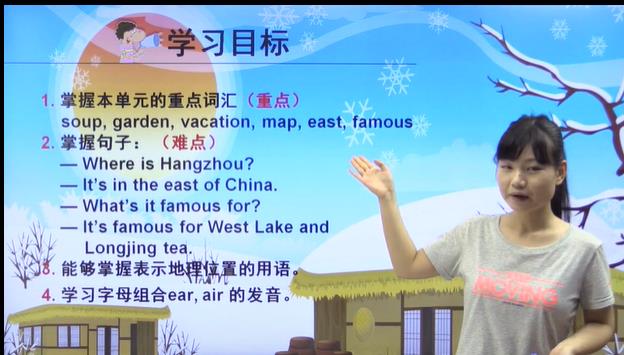
1. 要求學(xué)生能夠聽、說、認(rèn)讀重點單詞。如:map, north, south, east, west 2. 能正確使用本課的重點句型。如:Where did you go on your vacation? What did you do?
1.能夠?qū)W會基本句型來表達(dá)對假期旅游的看法,和朋友用英語交談。 2.能夠掌握自然的口語表達(dá)方式,靈活應(yīng)用句型和單詞。
意識到英語學(xué)習(xí)是一個不斷積累與探索的過程,積極配合老師的學(xué)習(xí)步驟,定期復(fù)習(xí)與鞏固所學(xué)知識,培養(yǎng)對英語的語感。
【重點】 1. Be able to listen and read the words and dialogues. 2. Be able to ask and answer questions.
1. Learn how to use the special questions to communicate and change information.特殊疑問句的問答以及各種信息的替換和交流。 2. Use the different teaching skills to motivate students’ learning interests.通過多種教學(xué)方式激發(fā)學(xué)生的學(xué)習(xí)興趣,培養(yǎng)學(xué)生的聽說能力。
Recorder, Multimedia. Step 1. Greetings and warm-up activities 老師和學(xué)生打招呼問好,做一個簡單的free talk. Review the words that we learned last class. 帶領(lǐng)學(xué)生一同回憶上節(jié)課所學(xué)內(nèi)容,也可通過提問的方式,根據(jù)學(xué)生表現(xiàn)進行指導(dǎo)或表揚。 Step 2. Let students review the words and do some practice 1. 復(fù)習(xí)單詞。 2. 帶領(lǐng)學(xué)生熟讀單詞,并糾正個別同學(xué)的發(fā)音。 3. 小組活動。 Let’s play T: Do you like playing games? Ss: Yes! T: Let’s see how to play. Are you clear? Who can have a try? 學(xué)生兩人一組進行問和答,班內(nèi)展示,及時評價。 Step 3. Do some listening task and exercise 老師放課文錄音,讓學(xué)生聽音復(fù)述,老師完整的介紹一遍這段對話,并將重點句子寫在黑板上,并讓學(xué)生實際演練。
T: Look at the map. Where is YI Chang? YI Chang is in the southwest of HU BEI. What’s YI Chang famous for? It’s famous for the Three Gorges Dam. Can you say other cities in YI Chang? Please work in pairs. 學(xué)生兩人一組進行問和答,班內(nèi)展示,及時評價。 設(shè)計意圖:讓學(xué)生從最熟悉的家鄉(xiāng)說起,讓孩子們有話可說。 T: (點擊課件,出現(xiàn)A部分圖片) Who are they? S: Yaoyao and Andy. T: You have a good memory. What are they talking? Let’s listen and repeat. 學(xué)生聽音跟讀,班內(nèi)展示,及時評價。 Step 4. Do some activities together. 1. Let the students close their books. Ask them to say what they learned in this lesson. Ask some volunteers to write on the blackboard. 2. Do some exercises. Step 5. Homework. 1. Do some listening task at home.聽錄音,并模仿跟讀。 2. Copy the words and sentence patterns.書寫單詞和句子。 3. Do some conversation with your partner using the pattern in this lesson. 和小伙伴用本單元的句型做對話練習(xí)。 Unit 1 In China Lesson 3 通過一段英文閱讀來鍛煉學(xué)生的英語閱讀速度和快速獲取信息的能力。在做練習(xí)中 反復(fù)練習(xí)基本句型和英語單詞。
Mastery words and expressions: around, foggy, spicy, silk Oral words and expressions: Where is …? What’s it famous for …? What can you do there? 【
能夠聽說重點單詞及短語,流利表達(dá)完整的句子,在寫作方面可以運用基礎(chǔ)句型鍛煉自己的英文水平。1. Be able to listen and read the words and dialogues: Where is …? What’s it famous for …? What can you do there?
能夠復(fù)習(xí)并且鞏固已學(xué)的英語知識,能夠認(rèn)識到學(xué)習(xí)英語的樂趣。能夠用過去式表達(dá)句子,體驗不同時態(tài)的動作發(fā)生的時間。
1. The relevant words and dialogues: around, foggy, spicy, silk 2. Be able to talk.
【難點】 The relevant words and dialogues.
Recorder, Multimedia. Step 1. Greetings and warm-up activities Teacher can let students sing a song to have a relaxation. Step 2. Read the text and tell others what you know form the text Student A: Angel visits three interesting cities. Student B: She visits a city in the west of China. Student C: Angel flies to a city in the east of China. Student D: Angel’s last city is never too hot and too cold. Step 3. Use the sentence you learn in the context and make conversations with your friends Student A: Where is Xiamen? Student B: It’s in the south of China.
Student C: What’s it famous for? Student D: It’s famous for beautiful seaside. Student E: What can you do there? Step 4. Read the text and tell the main idea of the text in the students' own words Let the students speak in front of the class. Encourage them not to be shy when they stand there. Give the students chances to speak loudly in front of the class. Ask them what kind of summer vacation they want. Step 5. Encourage the students to ask more questions about this part 1. Divide the class into groups of three or four to finish the task. 2. Ask all of the students to take part in the discussion. Step 6. Homework 1. Finish off the exercises in the textbook. 2. Go on the next reading in the student book. 3. Copy the words and sentences; read the text.書寫單詞和句子,熟讀課文。 4. Review the contents.復(fù)習(xí)本單元的單詞和句型。 Unit 2 Around the World Lesson 1 本課讓我們一同感受不同國家,不同民族的文化,對其他國家文化進行了解。
Master words and expressions: London, Toronto, Sydney… Oral words and expressions: Where do you want to go? What do you want to do?
Be able to listen and read the words and dialogues: Where do you want to go? What do you want to do? 2. Be able to ask and answer questions.
The teacher should create a condition where the students can enjoy themselves much while they are learning English. In other words, learning English should be fun, not a boring job.
1. 學(xué)習(xí)并掌握詞匯: The relevant words and dialogues: London, Toronto, Sydney… 2. Be able to talk. 【教學(xué)難點】 The relevant words and dialogues. Recorder, Multimedia. Step 1. Greetings and warm-up activities Teacher can let students sing a song to have a relaxation before class and then make them pay attention to their learning. T: Hello, boys and girls. Nice to see you again. Ss: Nice to see you again. T: Do you like singing songs? Ss: Yes. T: Let’s sing a song together. 設(shè)計意圖:師生同唱26字母歌,歌詞簡單,節(jié)奏上口,降低學(xué)生學(xué)習(xí)英語的畏難情緒。同時為新課學(xué)習(xí)做下鋪墊。 Step 2. Let’s talk and have a presentation. T: Look! This is Yaoyao. This is Bill. What are they talking?
S: … T: Good job! How about this picture? What are they talking? S: … 設(shè)計意圖:半封閉式的訓(xùn)練,鞏固學(xué)生剛學(xué)的知識。 T: (點擊課件,出現(xiàn)B部分人物) Who are they? S: … T: What are they talking? Can you guess? S: … T: (點擊課件,出現(xiàn)對話文本) Can you read? S: Yes. T: Go! S: … T: Let’s listen and repeat. Ss: 學(xué)生聽音跟讀。 T: Look at the pictures. What is it? Where can we see it? S: … T: Good. Let’s work in 2. Ss: 學(xué)生兩人一組進行游戲,班內(nèi)展示,及時評價。 T: The UK is beautiful. The USA is beautiful, too. Our motherland---China is beautiful. So we should love our motherland. (點擊課件,出現(xiàn)句子。) 設(shè)計意圖:對學(xué)生進行德育教育。 Step 3. Read the text and tell the main idea of the text in the students’ own words Ask them where they want to go in this summer vacation. Let the students speak in front of the class. Encourage them not to be shy when they stand there. Give the students chances to speak loudly in front of the class. Step 4. Encourage the students to ask more questions about this part 1. Divide the class into groups of three or four to finish the task. 2. Ask all of the students to take part in the discussion. Step 5. Homework
Finish off the exercises in the textbook. 2. Go on the next reading in the student book. Unit 2 Around the World Lesson 2 我們?nèi)绻袡C會去世界各地了解一下,感受一下不同的人類文明,那對我們的一生將會受益無窮,并留下美好的回憶。
Master words and expressions: speak, French, English, Canada. Oral words and expressions: What do you know about …?
、1. Be able to listen and read the words and dialogues. 2. Be able to ask and answer questions. 【情感目標(biāo)】 學(xué)習(xí)英語就是為了運用,和小伙伴的交談中一定要有意識地運用。日積月累,知識就會變成大腦的一部分,學(xué)英語也會隨著越來越多的知識使你更加感興趣。
1. The relevant words and dialogues: What do you know about …? 2. Be able to talk. 【教學(xué)難點】 The relevant words and dialogues: speak, French, English, Canada
Recorder, Multimedia. Step 1. Greetings and warm-up activities and have a write. T: Just now you finished the chart. Now let’s choose a country and write about it. For example: What do you know about Canada? Canada is famous for maple leaves. People there speak English and French. Toronto is a big city. It’s in the southeast of Canada. You can visit the CN Tower. Can you? Ss: Yes! T: Let’s write! 學(xué)生自己完成練習(xí),教師班內(nèi)巡視,及時指導(dǎo)與評價。 T: Boys and girls, you should know: It’s necessary to know more about other countries. Are you clear? Ss: Yes! Step 2. Think, write and talk T: Look here! (點擊課件,出現(xiàn)B部分圖片)What’s this? S: Koala. T: What country can we see it? S: Australia. (學(xué)生邊說教師邊在黑板上板書) T: What do you know about Australia? S: … (學(xué)生邊說教師邊在黑板上板書) T: Now it’s your turn to think and write. 學(xué)生自己看圖,思考,完成表格。班內(nèi)展示。 T: Are you right? Let’s watch and check the answer. T: Can you say something about the chart? For example. Canada is famous for maple leaves. People there speak English and French. Toronto is a big city. It’s in the southeast of Canada. You can visit the CN Tower. Please work in a group of 4. Then show it. 學(xué)生四人小組進行準(zhǔn)備,班內(nèi)展示,及時評價。 設(shè)計意圖:適時進行德育滲透。 Step 3. Read the text and tell the main idea of the text in the students’ own words ◆ 教學(xué)過程
Let the students speak in front of the class. Encourage them not to be shy when they stand there. Give the students chances to speak loudly in front of the class. Step 4. Encourage the students to ask more questions about this part 1. Divide the class into groups of three or four to finish the task. 2. Ask all of the students to take part in the discussion. Step 5. Homework 1. Finish off the exercises in the textbook. 2. Go on the next reading in the student book. Unit 2 Around the World Lesson 3 英國,加拿大,美國,澳大利亞,你能夠了解到不同的文化和景觀以及代表建筑,感受不同的文化元素,了解多元化世界之美。
Be able to listen and read the words and dialogues: hiking, sunrise, president; It’s a good city for…You can…You can also… Be able to ask and answer questions.
Be able to talk. Enhance students’ ability of practical applications.
學(xué)會用英語很自然表達(dá)自己的想法,運用英語句型,使自己更加敢于表達(dá)自己。此外英語中也能夠?qū)W習(xí)很多外國的文化,開拓自己的眼界。
【重點】 The relevant words and dialogues: hiking, sunrise, president. Be able to talk.
The relevant words and dialogues: It’s a good city for…You can…You can also… Recorder, Multimedia. Step 1. Greetings and warm-up activities First, teacher will ask students some questions and then do the reading together. 學(xué)生默讀課文,選擇答案,班內(nèi)校正,及時評價。 T: Let’s act. 學(xué)生分組展示。及時評價。 Student A: The UK is a small but beautiful country. Student B: Canada has many beautiful mountains and lakes. Student C: The USA is a big, beautiful country. Student D: Australia is a beautiful country. T: Let’s listen and repeat. 學(xué)生跟讀。 Step 2. Read the text and tell the main idea of the text in the students’ own words Let the students speak in front of the class. Encourage them not to be shy when they stand there. Give the students chances to speak loudly in front of the class. Step 3. Work in pairs Student A: What can you see in the UK? Student B: You can see Tower bridge. Student C: What do many children like?
Student D: They like going to the Disneyland. Student E: You can also visit the White House. Step 4. Encourage the students to ask more questions about this part Divide the class into groups of three or four to finish the task. Ask all of the students to take part in the discussion. Ask the students which city and which country they like best. Step 5. Listen and answer 1. Play the audiotape and ask the students to listen carefully. 2. Pick some students out to answer the questions. Explain how to show ways and show some useful phrases. Step 6. Sum up 1. Let the students close their books. Ask them to say what they learned about the countries and cities in this lesson. Ask some volunteers to write on the blackboard. 2. Do some exercises. Step 7. Homework 1. Finish off the exercises in the textbook. 2. Go on the next reading in the student book. Unit 3 Animal World Lesson 1 動物是構(gòu)成大自然最絢麗色彩的一部分,蟲鳴鳥叫,鶯歌燕舞,動物也是人類的朋友,他們同樣值得人類的尊重和保護。本課要求學(xué)生掌握幾種常見動物的表述方法以及學(xué)會詢問并回答喜歡的動物。
Be able to listen and read the words and dialogues: reptiles, birds, fish, mammals, insects, penguin, shark, whale; What animals do you like? 2. Be able to ask and answer questions. 【能力目標(biāo)】 Be able to talk. Enhance students’ ability of practical applications. 【情感目標(biāo)】 能夠從這些英語詞匯中看到英語在日常生活中的重要性,要更加積極學(xué)習(xí)英語,提高自信和熱情。 【教學(xué)重點】 1. The relevant words and dialogues: reptiles, birds, fish, mammals, insects, penguin, shark, whale. 2. Be able to talk. 【教學(xué)難點】 The relevant words and dialogues: What animals do you like? Recorder, Multimedia. Step 1. Greetings and warm-up activities T: (點擊課件) So many animals here. And these are our old friends. What are they talking about? Please read quickly and answer. S: Animals. T: How to talk? S: … T: Let’s do it like them. You should talk in group of 4. Then show it in class. 學(xué)生四人一組談?wù)摚鄡?nèi)展示,及時評價。
T: Can you talk about your favourite animals? Let’s read Andy’s passage. 學(xué)生大聲讀 T: Can you talk your favourite animals like Andy? S: Yes! T: Let’s do it. (學(xué)生準(zhǔn)備,班內(nèi)展示,及時評價。) T: Boys and girls, animals are our friends, we should love them. Are you clear? S: Yes. 設(shè)計意圖:對學(xué)生進行德育教育。 T: Let’s listen and repeat. 學(xué)生聽音跟讀。 Step 2. Read the text and tell the main idea of the text in the students’ own Let the students speak in front of the class. Encourage them not to be shy when they stand there. Give the students chances to speak loudly in front of the class. Step 3. Choose and write T: Look here. Who can finish the sentence? S: … T: Why do you choose this word? S: … T: Cool! Who can finish this sentence? S: … T: Why do you choose this word? S: … T: Can you finish the sentence like them? S: Yes! T: Let’s do! 學(xué)生動筆寫,教師巡視指導(dǎo),及時評價。 Step 4. Encourage the students to ask more questions about this part. Divide the class into groups of three or four to finish the task. Ask all of the students to take part in the discussion. Step 5. Sum up
1. Let the students close their books. Ask them to say what they learned in this lesson. Ask some volunteers to write on the blackboard. 2. Do some exercises. Step 6. Homework 1. Finish off the exercises in the textbook. 2. Go on the next reading in the student book. Unit 3 Around the World Lesson 2
【難點】 能夠初步學(xué)會在恰當(dāng)?shù)那榫持羞\用以上功能句,并能按照要求在所提供的語境中書寫幾個意義連貫的句子。 Recorder, Multimedia. Step 1. Greetings and warm-up activities T: Good morning, boys and girls. S: Good morning, Miss Fan. T: Do you like playing games? S: Yes! T: Let’s play a guessing game. Please listen carefully and tell us what animal it is. (點擊課件,出現(xiàn)兔子的謎語) It’s an animal. It’s white. It has long ears. It likes to eat carrots. It can jump. What is it? S: It’s a rabbit. T: You are so clever. Can you be a little teacher? Just like me. What animals are they? What colour are they? What do they look like? What do they like to eat? What can they do? Are you clear? S: Yes! S1: It’s an animal. … S2: It’s ______ 設(shè)計意圖:利用學(xué)生愛玩猜謎語的游戲,復(fù)習(xí)第一課時學(xué)習(xí)的內(nèi)容。同時進行熱身,幫助孩子們很快以最好的精神狀態(tài)進入學(xué)習(xí)英語的氛圍之中。 Step 2. Let’s Learn 1. A Look, listen and say T: Look at the two pictures. What’s this? S: A shark. T: Good! And what is that? ◆ 課前準(zhǔn)備 ◆ ◆ 教學(xué)過程
S: A whale. T: They are difference. Yes? Ss: Yes! T: Let’s look and find the difference. S: … T: Are they the same kind of animal? Are they fish? Are they mammals? S: No! T: They are different kind of animals. What’s the meaning of kind? S: 種類 Step 3. Homework 1. Read P28 to your parents. 2. Talk about an animal you know. 3. Write a short passage about an animal you know. 設(shè)計意圖:家庭作業(yè)以說為主,檢測學(xué)生是否真正掌握本節(jié)課的內(nèi)容。作業(yè)實行分層,讓孩子根據(jù)自己的學(xué)習(xí)能力選作,真正實現(xiàn)了以生為主。 Unit 3 Animal World Lesson 3 1. 本課圍繞動物進行閱讀能力訓(xùn)練和寫作練習(xí)活動。 2. 本課圍繞動物描述進行復(fù)習(xí)。 【知識目標(biāo)】 1. 能夠正確理解對動物進行描述的文段,并能進行一定程度的段落描述。 2. 能夠圍繞本單元主要交際句型進行交際和表達(dá)。
The students can use simple sentences to express their activities. 1. Be able to listen and read the words and dialogues. 2. Be able to ask and answer questions.
能夠在實踐中鍛煉自己的口語,把英語與日常生活中看到的小動物相聯(lián)系。 學(xué)生通過多種形式的語言活動,交流所喜歡的動物的種類、高度、重量、速度以及其他特點,能夠綜合運用本單元所學(xué)語言。
對所談?wù)摰膭游锏拈喿x的成段理解及其描述的段落書寫。
Recorder, Multimedia. Step 1. Greetings and warm-up activities Let the students review the main words and sentences. After that, students can sing a song together to have a relaxation. Step 2. Presentation and Practice. 1. Read the words 2. Read the words and match them 3. Play a guessing game Show the pictures of this unit, let the Students discuss about them. (Where, how old, how heavy, how fast, differences) Read part A, underline the sentences that you couldn’t understand, and then choose the right answers. Step 3. Play a game Play the guessing game with the cards in the group. Then give a group work: Everyone choose one animal and talk about it and fill in the blanks (category, height, weight, speed…) Choose some ◆ 教學(xué)重難點 ◆ ◆ 課前準(zhǔn)備 ◆ ◆ 教學(xué)過程
groups to show in the class. The teacher give the clues to ask the Students to write some sentences about one animals. Step 4. Sum up 1. Let the students close their books. Ask them to say what they learned in this lesson. Ask some volunteers to write on the blackboard. 2. Do some exercises. Step 5. Homework 1. Recite the words and structured sentences. 2. To try to retell Part A. Unit 4 Feelings Lesson 1 本節(jié)課是第四單元的第一節(jié)課,以情感作為話題,通過用展現(xiàn)feelings的圖片引出本文的內(nèi)容,引導(dǎo)學(xué)生掌握表達(dá)喜怒哀樂等情感的詞語和句子。教師要引導(dǎo)學(xué)生正確識別情緒的喜怒哀樂。學(xué)生能夠熟練的表達(dá)自己的感受。
【知識目標(biāo)】 1. 重點學(xué)習(xí)本單元單詞surprised angry happy worried sad excited nervous proud。 2. 辨析:surprised和surprising, worried和worrying, excited和exciting。 【能力目標(biāo)】 通過本節(jié)課的學(xué)習(xí),學(xué)生可以結(jié)合自己已有的生活經(jīng)驗和場景,合適的表達(dá)自己的情感,學(xué)會運用“I fee....I am.... something makes me....”進行表達(dá)。
Multimedia. Step 1. Warm-up Hi everyone, welcome to my class .How are you today? Please describe your feeling now, please use “I am…. I feel…something makes me…. I am happy. I feel hungry. Sports make me tired. Step 2. Look at these pictures and answer following questions There are six pictures How does the boy feel? When the dog is running over to Yaoyao. How does the boy feel? When the dog is ill. How does the boy feel? When the dog eats lily’s lunch. How does the boy feel? When the dog is winning the race. How does the boy feel? When he can’t find it. How does the boy feel? When the dog comes home back. How does the boy feel? When they go out to play. Step 3. Learn and read new words Surprised happy excited proud.
Angry worried sad nervous. Students read after the teacher until they master them. Then ask students when we will use them and ask some students to give some examples. Step 4. Listen and talk each other 1. Look at the following pictures, after five minutes, ask some students to write the answers on the blackboard. Then the teacher talk with students about the answers. 2. Divide the class into two groups, then play the dialogue. 3. The teacher help the students analysis surprise surprised worry worried excited exciting. V+ing=something’s character V+ed=somebody’s emotion Step 5. Practice The teacher ask students to finish the blanks. Then ask some students to give the answers and translate them. I am going to run. I am __. Bill buys me some meat. I am __. I am ill. Bill is ___. Step 6. Homework Copy the words of test 1. Find more word about feelings. Unit 4 Feelings Lesson 2 本節(jié)課主要以對話的形式帶學(xué)生們走進課堂,仍然以情緒表達(dá)作為話題展開,重點引導(dǎo)學(xué)生們學(xué)習(xí)you look…..和why…..because………., 這兩種句子結(jié)構(gòu),帶領(lǐng)學(xué)生了解學(xué)習(xí)一般過去式,以小組的形式進行交流討論仍是本節(jié)課重要的上課形式。
【知識目標(biāo)】 1. 在詢問對方感覺狀態(tài)的時候,可以正確使用You look… 2. 在與別人交流的過程中當(dāng)對方詢問為什么Why 是這種情緒的時候,應(yīng)該正確有because 來回應(yīng)對方。 3. 正確掌握一般過去式的句子結(jié)構(gòu)和標(biāo)志性時間狀語。基本結(jié)構(gòu):主語+動詞的過去式+其他成分 。否定形式:was/ were+not和行為動詞前+didn’t 還原行為動詞。
學(xué)習(xí)本節(jié)課后,學(xué)生可以在日常生活中根據(jù)實際場景正確使用一般過去式和why 與because以及You look……的使用。 【情感目標(biāo)】 學(xué)習(xí)本節(jié)課后學(xué)生能夠積極主動的靈活運用所學(xué)知識,更加愿意接受新的知識,熱愛生活,積極向上。
【重點】 重點學(xué)習(xí)一般過去式和why與because的使用。 作為小學(xué)生,對于一般過去式的掌握可能出現(xiàn)困難,因此教師應(yīng)該不斷反復(fù)強化這些知識。
Multimedia. Step 1. Warm-up Welcome to my class, now, look at these pictures, please answer my questions. He looks sad, why? The girl looks happy, why? The teacher looks angry, why? Ask some students to give the answers, Because he lost his bag. ◆ 教學(xué)重難點 ◆ ◆ 課前準(zhǔn)備 ◆ ◆ 教學(xué)過程
Because the girl passed the exam. Because some students didn’t finish the homework. So today we will learn the important sentences “sb+ looks +adj”和“why…..because….”. Step 2. Listen and answer Please the tape and answer my questions. How many pictures can you number? What happen in these pictures? Ask some students to answer. Two pictures. In the first picture, the boy looks bad , because he was is ill. In the second picture, the students looks earnest, because they were studying. Step 3. Read and talk each other Divide the class into two groups, then play the dialogue, the boys act Bill and the girls act Lily. Bill: Look at these pictures, Lily. Lily: You look sad in this picture. Why? Bill: I was sad because I was ill. I had to stay in bed. Lily: Well, look at this picture. You’re in bed too, but you look happy. Why? Bill: I was happy because Andy came to see me and helped me with my math. Lily: Oh, You look worried in this picture. What happened? Bill: I was worried because I wasn’t good at math. I didn’t like math tests. Lily: Did you do well in the math test? Bill: Yes. Look, I got an A. I was so proud. Lily: Congratulations! Bill: Thank you! Step 4. Learn to new grammar Past tense is an important grammar in this text. Students should master: 肯定形式:主語+動詞過去式+其他 否定過形式:was /were+not; 在行為動詞前+didn’t, 同時還原行為動詞 一般疑問句:Did+主語+謂語動詞原型+其他?Was/were+主語+表語 時間狀語標(biāo)志:yesterday; two days ago; in 1960; just now; last year; and so on.
Step 5. Practice The teacher ask students to practice, after studying the Lesson 2. The teacher give students five minutes to finish the following work. Then ask some students to write the answers on the blackboard. 1. Why are you happy today? I am happy because_________________. 2. Why are you _______________today? I am _________because_______________. Teacher talk with the students about the answer. 1. I past the exam. 2. Nervous; I can’t find my dog. Step 6. Homework Recite the text. Preview the Lesson 3. Unit 4 Feelings Lesson 3 本節(jié)課是第四單元的第三課時,這節(jié)課的教學(xué)內(nèi)容主要是復(fù)習(xí)前兩節(jié)學(xué)習(xí)的詢問某人感受的表達(dá)方式以及過去時態(tài)的運用,并學(xué)習(xí)新的內(nèi)容“如何以日記的形式記錄自己或者某人在某天經(jīng)歷的事情和感受”。并考察學(xué)生對于前兩節(jié)課內(nèi)容的掌握程度。 【知識目標(biāo)】 1. 詢問對方的感受的表達(dá)方式 how +助動詞+主語+feel +時間狀語。 2. 復(fù)習(xí)鞏固一般過去式 3. 以日記的形式記錄某天的感受,首先判斷時間發(fā)生在過去,所以日記中出現(xiàn)的謂語動詞應(yīng)該用過去式,其次,注意日記的格式,最后 日記內(nèi)容的寫作上要有邏輯性。
學(xué)生學(xué)習(xí)完本節(jié)課之后,可以以英文的形式記錄某一天的所見所聞以及感受,提高語言表達(dá)能力和邏輯思維能力。 【情感目標(biāo)】 有助于提高學(xué)生養(yǎng)成寫日記的良好行為習(xí)慣,并熱愛寫日記,提高學(xué)生熱愛學(xué)習(xí)的自信心。
詢問情緒的表達(dá)方式和過去式的運用,以及日記的寫作格式和內(nèi)容的掌握。仍然是本單元的主要學(xué)習(xí)內(nèi)容。
小學(xué)生對于日記的寫作可能會遇到困難,因為有限的詞匯量和思維上的不成熟。 Multimedia. Step 1. Greetings and warm–up activities Which students can answer us the following questions? How do you feel now? How did you feel yesterday? How did you feel on Thursday? Ask several students to express their feelings. Li Ming feels happy today, because he can play with friends. Susan felt sad yesterday, because she was ill. Tom felt tired on Thursday, because he played football all day Step 2. Read and answer Ask students to read the diary about Andy, then ask some students to answer the questions. Wednesday Rating: I had a good day today.
I got an A on my math test. I felt very happy. There was a new girl in our class, her name is Jiayi. She likes playing basketball and listening music. I was excited to meet her. I hope we will be friends. After school we went a singing competition. We sang in a competition together. We won first place, so I felt very proud. How did Andy feel on Wednesday? Why? What does Jiayi like? Why did Andy feel proud? … Andy felt happy on Wednesday, because she got an A on her math test. Jiayi likes playing basketball and listening music. Because Andy and Jiayi won first place. Step 3. Writing diary method First: the students should master the layout about the diary. And in the top left corner of the diary, there is week, then in the top right corner of the diary , there is feeling rate. Second: In the diary, the actions should be the past tense. Lastly: consecution. The writer should express his feeling at the first. Then write what happened. Step 4. Read 可以采取跟讀、分組讀和自讀的形式進行。 The teacher divided the students into four groups, then the diary will be divided into four parts, each group act each part. Friday rating: I had a bad day today. My grandmother was ill. She went to the hospital, and I was very worried. I didn’t finish my homework yesterday. My teacher was very angry. I played basketball with my friend Jiayi after school. I hurt my leg, so I was sad. Step 5. Practice The teacher ask students to write about your day. Then ask some students to write her writing. Day _____________ Rating_______________ Today is______________. I am __________.
Because __________________________. Step 6. Homework Review the Lesson 3. And write about your day. Unit 5 Famous People Lesson 1 本節(jié)課是第五單元的第一課時,這節(jié)課主要以介紹名人為主,主要引導(dǎo)學(xué)生學(xué)會介紹人物,學(xué)會使用“what do you know about sb? ” 句式 以及“be good at doing sth” , 表示某人擅長做某事。
1. 學(xué)會“what do you know about sb?詢問對方是否了解某人。 2. 學(xué)會be good at doing sth. 3. 擴展對更多名人的了解。 【能力目標(biāo)】 通過本節(jié)課的學(xué)習(xí),學(xué)生可以靈活使用重點句式,提高與別人的交流能力,并擴展學(xué)生對名人資料的收集能力。
提高學(xué)生之間的合作與交流能力,增加學(xué)生熱愛學(xué)習(xí),用于求知的探索精神,增強學(xué)生在交流過程中的成就感。
本節(jié)課重點以圖片的形式向?qū)W生展示名人,以小組討論的形式詢問對名人的了解,并可以運用本節(jié)課的重點句子進行相應(yīng)的作答。
