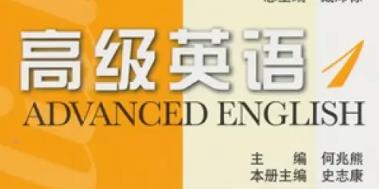
高級(jí)英語是高等教育自學(xué)考試英語專業(yè)高級(jí)階段(本科)的精讀課,屬必考課程。在語音、語調(diào)、詞匯和語法的知識(shí)已經(jīng)掌握,聽、說、讀、寫、譯的語言技能已經(jīng)打好基礎(chǔ)后,本課程的重點(diǎn)是:(1)提高閱讀理解和詞匯運(yùn)用能力,即能掌握和使用所學(xué)的詞匯,特別是同義詞、近義詞的區(qū)分和使用,正確理解文章的內(nèi)容和主題思想,抓住文章的要點(diǎn),分析文章的結(jié)構(gòu)、語言技巧和修辭特點(diǎn);(2)提高語言表達(dá)能力,即能用英語解釋、用漢語翻譯文章中的難句,使用英語歸納文章的主題思想,并能對(duì)文章的內(nèi)容進(jìn)行簡(jiǎn)單的分析、評(píng)論。
在這一階段,學(xué)生應(yīng)該能用辭典和其他工具書獨(dú)立解決語言和文化、背景知識(shí)方面的難點(diǎn),提高自學(xué)能力,增加自學(xué)能力,增加文化知識(shí),尤其是所學(xué)語言國(guó)家(主要是英、美)的背景和文化知識(shí),更好地使語言和文化結(jié)合在一起。
(二)教學(xué)要求:
本課程的教學(xué)要注重使用以學(xué)生為中心的討論式教學(xué)方法。以目標(biāo)語為授課和課堂交流語言。
通過真實(shí)的交際型任務(wù),創(chuàng)造好的語言產(chǎn)出環(huán)境,以便培養(yǎng)學(xué)生使用目標(biāo)語言在高層次上表達(dá)、交流思想和分析問題的能力。同時(shí)要注重語言輸入的質(zhì)量和文化內(nèi)涵,以便讓學(xué)生得到真實(shí)和地道的語言信息。
本課程包括政治、經(jīng)濟(jì)、社會(huì)、語言、文學(xué)、教育、哲學(xué)等方面的文章。每課前附有導(dǎo)讀課文后附有注釋,包括作家介紹,歷史背景,有關(guān)典故,語言難點(diǎn)并且每篇課文都配有大量的相關(guān)練習(xí),包括課文理解、詞匯練習(xí)、口頭練習(xí)、中英互譯和寫作練習(xí)等。通過高級(jí)英語本課程的學(xué)習(xí),學(xué)生應(yīng)達(dá)到以下基本要求:
一、課程的性質(zhì)及任務(wù)
本課程是廣東省主要面向中小學(xué)教師開設(shè)的英語教育(本科)教學(xué)計(jì)劃中的核心課程之一。設(shè)置本課程的目的在于加強(qiáng)及提高考生的英語閱讀理解和英語知識(shí)運(yùn)用能力。
二、指定必讀教材
李觀儀主編的《新編英語教程》第五冊(cè),上海外語教育出版社出版。
三、考試題型
高級(jí)英語(一)試卷由六個(gè)部分組成:
1、閱讀理解 (20%)
2、詞匯 (10%)
3、完形填空 (10%)
4、成段改錯(cuò) (10%)
5、句型轉(zhuǎn)換 (10%)
6、漢譯英 (40%)
四、題型說明
1、閱讀理解
閱讀理解包括兩部分。
第一部分包含取自指定必讀教材課文的若干段落,總長(zhǎng)度為800詞左右,總共10道選擇題。要求考生讀完指定的段落后,根據(jù)自己的理解選擇最佳答案。本部分主要測(cè)試考生能否理解所學(xué)過的教材課文的細(xì)節(jié)以及主要詞匯的意義。
第二部分包含難度與教材課文相當(dāng)?shù)奈恼氯舾善恼碌碾y度、體裁和題材各不相同,總長(zhǎng)度為800詞左右。每篇文章后面有10道是非題。要求考生讀完每篇文章后,根據(jù)題目的要求和文章的內(nèi)容,對(duì)于考題中給出的句子做出“是”或“非”的判斷。本部分主要測(cè)試考生能否抓住文章的要旨,能否理解文章的細(xì)節(jié),能否把握文章的邏輯結(jié)構(gòu)并根據(jù)文章提供的信息進(jìn)行邏輯推理或判斷,以及能否根據(jù)上下文猜測(cè)生詞的意義。
2、詞匯
詞匯部分包含10道多項(xiàng)選擇題(選詞填空)。本部分主要測(cè)試考生對(duì)于指定必讀教材的詞匯的掌握程度,尤其是對(duì)意義相近的詞匯的辨別能力。所測(cè)試的詞匯全部選自必讀教材。
3、完形填空
完形填空的短文選自指定必讀教材課文,其中有10個(gè)單詞只保留第一個(gè)字母,其余部分被抽掉,成為空白。要求考生在空白處填上恰當(dāng)?shù)淖帜福菇M成的單詞與上下文意義相符,詞語搭配得當(dāng),前后語氣連貫。本部分主要測(cè)試考生理解文章,運(yùn)用詞匯和語法知識(shí)的能力。考生答題前必須先將短文通讀一遍,理解其大意,然后根據(jù)所學(xué)的語法、篇章、詞語搭配等方面的知識(shí)去填寫正確答案。
4、成段改錯(cuò)
成段改錯(cuò)的短文選自指定必讀教材課文,改錯(cuò)部分分10行排列,每行右側(cè)行尾有一條帶有編號(hào)的橫線。有的行里有錯(cuò)誤,有的行里沒有錯(cuò)誤,但每行最多一個(gè)錯(cuò)誤。錯(cuò)誤類型有三種:(1)多加了一個(gè)詞的錯(cuò)誤;(2)漏掉一個(gè)詞的錯(cuò)誤;(3)用詞不當(dāng)?shù)腻e(cuò)誤,包括在詞義、語法、搭配方面的用詞錯(cuò)誤。做這道題的要求是:1、在多余的詞上劃一條斜線,例如“there”,然后將詞寫在右側(cè)的編號(hào)橫線上;2、在漏掉了詞的地方標(biāo)上一個(gè)“插入號(hào)”---“∧”,并將漏掉的詞(即你認(rèn)為要加上去的詞)寫在右側(cè)編號(hào)橫線上;3、在錯(cuò)誤的用詞的底下劃一條橫線,例如“that”,并將正確的詞寫在右側(cè)編號(hào)橫線上;4、在沒有錯(cuò)誤的那一行的右側(cè)編號(hào)橫線上打一個(gè)“√”。本部分主要測(cè)試考生辨別錯(cuò)誤和正確用詞的能力。
5、句型轉(zhuǎn)換
句型轉(zhuǎn)換共有10道題,每道題包含一個(gè)完整的句子和一個(gè)不完整的句子,完整的句子全部選自指定必讀教材課文。要求考生把不完整的句子補(bǔ)充完整,使其意義與所提供的相應(yīng)的句子基本相同。本部分主要測(cè)試考生理解所學(xué)過的教材課文的細(xì)節(jié)程度以及靈活運(yùn)用語法規(guī)則表達(dá)思想的能力。
6、漢譯英
漢譯英的素材選自指定必讀教材課文,包括2篇各含250字左右的短文。要求考生把其中底下劃線的8段句子翻譯成英語。本部分主要測(cè)試考生掌握所學(xué)過的教材課文的程度以及運(yùn)用所學(xué)的詞匯和語法知識(shí)進(jìn)行英語書面表達(dá)的能力。
五、高級(jí)英語(一)試題數(shù)目、題型、計(jì)分和答題時(shí)間一覽表
《高級(jí)英語》試題樣題(題型例釋)
Test of Advanced English (I) (Sample)
Ⅰ Reading Comprehension (20%)
1.Read the following passage carefully and then choose ONE from the given options to answer each question. Put the letter of your choice in the corresponding bracket of the ANSWER SHEET.
…
1.The idea of victory and defeat in war has been changed because
A. winners of the war can no longer become richer or more powerful.
B. both sides now would lose more than they gained.
C. modern weapons make it possible for a small country to defeat a big one.
D. people all over the world are not interested in war
…
2.Read the following passage carefully and then judge whether the statements are true or false by writing T or F.
…
1. We can infer from the text that Jim Crow is the boy’s name.
…
Ⅱ Multiple Choice (10%)
Choose the word or phrase which best completes each sentence. Put the letter of your choice in the corresponding bracket of the ANSWER SHEET.
1. The doctor did not _____ to him his hopeless condition.
A. expose B. reveal C. uncover D. betray
……
Ⅲ Cloze (10%)
Complete each of the words with initial letters given in the brackets by referring to the missing parts of the following passage with corresponding numbers.
Brain versus Computers
In science fiction there is to be found the recurrent theme of the omniscient computer which ultimately takes over the ordering of human life and affairs. Is this possible? I believe it is not; but I also believe that the arguments commonly advanced to refute this possibility are the wrong o_____. First, it is often said that computers “do not really think.” This, I submit, is nonsense; if computers do not think, then n_____ do human beings. For how do I detect the process of thinking? I present data --- say, an examination paper --- to a student, which he scans with a photoelectric organ we call an “eye”; the computer scans its d_____ with a photoelectric organ we call a “tape-reader.”
……
IV Proofreading (10%)
The following passage contains several errors, each line with a maximum of one error. And ATTENTION, some lines might be free from error. In each case only one word is involved. You should proofread the passage and correct the errors in the following way:
For a wrong word, underline the wrong word and write the correct one in the blank provided at the end of the line.
For a missing word, mark the position of the missing word with a “∧” sign and write the word you believe to be missing in the blank provided at the end of the line.
For an unnecessary word, cross out the unnecessary word with a slash “/” and put the word in the blank provided at the end of the line.
For a correct line, place a tick “√”in the blank provided at the end of the line.
It was market day so people and traffic had been pouring into the town since early morning. There was not enough room for all the pedestrians on the pavement and they overflowed into the road, endangering their
(1)lives from passing vehicles, the drivers which were constantly blowing their (2)horns to convince people to get out of the way. Yet it was a colorful view. (3)Peasants swayed along the street, their heads being piled high with baskets (4)or beautifully woven blankets which they hoped to sell to the townfolks. (5)Men with barrows forced their way along shouting their wares at the top of (6)their voices. Through it all, women with bright summer clothes threaded (7)their way, laughing and chattering but children darted in and out of the (8)crowds shrieking with laugh or sobbing with fear because they were lost. (9)The noise went on all day. People did not even stop for every meal. The (10)rubbish from all the activities of the day began to collect in the street. Finally, when night came, the street was empty and only the rubbish remained sadly blowing in the cool night wind.
(1) _____
(2) _____
(3) _____
(4) ______
(5) _____
(6) _____
(7) _____
(8) _____
(9) _____
(10) _____
V Rewrite the following (10%)
For each of the sentences below, write a new sentence as close in meaning as possible to the original sentence by using the given words as the beginning.
1. Almost a century later his manuscripts in the National Library in Dublin still glow with the power his passion.
By reading his manuscripts
VI Translate the following underlined parts into English (40%)
1). 1.當(dāng)學(xué)習(xí)英語的外國(guó)學(xué)生得知英語中竟有四十多萬單詞,(尚未包括哩語)時(shí),他們可能會(huì)喪失信心和勇氣,但是他們應(yīng)該鼓起勇氣,因?yàn)槌^半數(shù)的單詞,早已被歷史所淘汰,現(xiàn)在已經(jīng)不流通。2.即使是莎士比亞也只使用了大概兩萬單詞而已。現(xiàn)在的英國(guó)人平均詞匯量大概在一萬二千到一萬三千左右。3.盡可能地充實(shí)你的詞匯量當(dāng)然是件好事,但實(shí)際上如果擁有一萬單詞,你就可以滿足大量的口頭和書面表達(dá)的需要了。4.問題在于要對(duì)你所懂得的詞匯了如指掌才能運(yùn)用自如。準(zhǔn)確地掌握兩個(gè)詞勝過含糊地懂得三個(gè)。優(yōu)秀的木匠并非因其擁有的工具數(shù)量出名,而是因其使用這些工具的精湛技術(shù)而出名。
2)……


