


![[人教版]初一數學(七年級上冊)教程教學視頻播放](/pic/uploadimg/2018-6/201862520211479872.jpg)
![[人教版]七年級語文(上)冊微課](/pic/uploadimg/2019-6/20196308574046720.jpg)


Unit 1 Making New Friends
【重點短語】
1. good morning/ afternoon / evening 早上/下午/晚上好
2. glad / nice to meet / see you 見到你很高興
3. welcome to + 地點 歡迎來到……
4. let’s + v 讓我們做……
5. stand up 起立
6. sit down 坐下
7. this is... 這是……
8. thanks = thank you 謝謝
9. see you = see you later = goodbye 再見
10. ID number 身份證號碼
11. be from=come from 來自
12. in English 用英語
【重要句型】
1. ---What’s your name? ---My name is Sally.
2. ---Where are you from? ---I’m from China.
---Where do you come from? ---I come from China.
3. ---Where is he/ she from? ---He/She is from Japan.
4. ---What’s this/ that in English? --- It’s a/ an…
5. ---What’re these/ those in English? ---They’re…
6. ---How do you spell it? ---E-R-A-S-E-R, eraser.
7. ---Can you spell it? ---Yes, M-A-P, map.
8. —How old are you/ is he/ are they?
—I’m/ He is/ They are eleven.
9. —What’s your telephone number?
—It’s 4567967.
10. —What class/ grade are you in?
—I’m in Class Ten, Grade Seven.(注意大小寫)
11. Good morning/ afternoon/ evening.
12. —Hello!/Hi! —Hello!/Hi!
13. —Nice/Glad to see/meet you. —Nice/Glad to see/meet you, too.
14. —Welcome to China/my home. —Thanks.
15. —How do you do? —How do you do?
16. —How are you? —Fine, thank you. And you? —I’m OK.
17. —See you then/ later. —See you.
18. —Goodbye. —Bye.
19. —Thank you. —You’re welcome./That’s OK./Not at all.
【重點語法】
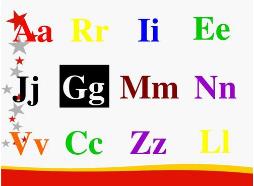
1. 元音字母:Aa Ee Ii Oo Uu
包含有以下元音的字母:
[e] Aa Hh Jj Kk
[i:] Ee Bb Cc Dd Gg Pp Tt Vv
[aɪ] Ii Yy
[ju:] Uu Qq Ww
[e] Ff Ll Mm Nn Ss Xx Zz
2. 大小寫
句首字母,人名,地名,稱呼語,專有名詞,星期的首字母要大寫,引人注意。
• Look!Is that Jane?
• He comes from Hubei, China.
• Mr. Wang, this is my mom.
• —What class are you in?
—I’m in Class Ten, Grade Seven.
• On Sunday, we go to the West Hill for a picnic.
3. Be動詞的用法
• 我用am,你用are,is用于他、她、它,單數用is,復數就用are。
• 含be動詞的陳述句變否定句在be后加not,變一般疑問句將be提前。
• 一般疑問句的肯定回答:Yes, 人稱代詞+ be;否定回答:No, 人稱代詞+be + not。
如:---They are teachers. ---They are not teachers.
---Are they teachers? ---Yes, they are./ No, they aren’t.
4. 不定冠詞、定冠詞和and的用法
(1)不定冠詞a, an的用法
a /an 都表示“一,一個”,a 用在以輔音音素開頭的單詞前,如:a book; a desk; an 用在以元音音素開頭的單詞前,如:an apple / an orange/ an English book;/ an English boy/ an old man;/an actor/ an English teacher/ an office worker.
(2)the是定冠詞,表特指,單復數前面都可用
• We are in the same class.
• The girl in a pink skirt is Jane.
• Where is the book?
• This isn’t my bike. The blue one is mine.
(3) and的用法
• 數字相加看做單數:Two and three is five.
• 顏色相加也是單數: Black and white is gray.
• 人和事物相加是復數:Lucy and Lily are sisters. The pen and the eraser are Jane’s.
5. 可數名詞單數變復數
(1)規(guī)則變化
① 一般在名詞詞尾加-s,如:car---cars; photo---photos; toy---toys; boy---boys
② 以s, x, ch, sh結尾的詞,在詞尾加--es,如:box---boxes; bus--buses
③ 以輔音字母+y結尾,變y為i再加es,如:baby--babies; family--families
4)以fe結尾,變fe為v再加es,如:knife--- knives
(2)不規(guī)則變化
如:foot---feet; man---men; woman---women; snowman---snowmen;
(3)集體名詞:people, clothes, police, family
(4)成雙出現的名詞:shoes, pants(trousers), gloves, eyes, ears
九. 一詞多義:An orange(桔子)is orange(橙色的).
Unit 2 Looking Different
【重點短語】
1. give sb. sth. = give sth. to sb.把某物給某人
Please give it to her.
2. look the same 長相相同
look different 長相不同,看起來不一樣
3. look like 看起來像
He looks like his father. = He and his father look the same.
4. next to 在……旁邊
The boy next to me is my good friend.
5. in +顏色 穿著……顏色的衣服
in +a/an +顏色+衣服 穿著……顏色的……
The boy in a yellow T-shirt and gray pants is my good friend.6. (1) both兩者都(be動詞之后,實義動詞之前)
They both have brown hair and black eyes.
They are both office workers.
(2)all 三者或三者以上都
They are all kind to me.
7. 數字+(形狀、大小)+顏色+n.
two big red apples
She has short blond hair.
【重點句型】
1. Who is your favorite actor?
2. We are in the same school, but we are in different grades.
3. What do/does +主語+look like? ……長得怎么樣?
---What does he look like?
--- He is not very tall but very strong.
4. We don’t look the same, but we are good friends.
We look the same, but we are in different clothes.
5. ---What color is/are +主語?---It’s/ They’re +顏色.
---What color is her hair? ---It’s blond.
6. This is my cap. = This cap is mine.
Is this your cap? = Is this cap yours?
---Whose cap is this? = Whose is this cap? --- It’s Sally’s.
---Whose are these bananas? --- They’re their bananas/ theirs.
7. His pants are blue and mine are white.(mine=my pants)
My T-shirt is green and his is brown.(his=his T-shirt)
8. I have small eyes, but he has big ones.(ones指代eyes)
My jacket is blue and white. That one is blue. (one指代jacket)
【重點語法】
1. 動詞原形和動詞第三人稱單數形式
(1)主語是第三人稱單數形式(he、she、it;單一的人;單一的名字;單一的事物),動詞要用單三形式。實義動詞變第三人稱單數的規(guī)則:
① 一般情況直接加“s”,如:come---comes,meet---meets
② 動詞以o,s,sh,ch, x結尾,加“es”,如:do--does; go--goes; teach--teaches
③ 以輔音字母+y結尾,變y為i,再加es, 如:study--studies, fly--flies, try--tries
④ 特殊情況:have--has
(2)句型轉換
① 當主語為第三人稱單數:變否定句時,在動詞前加doesn’t, 動詞現原形;變一般疑問句時,在句首加does,動詞現原形。
一般疑問句的肯定回答:Yes, 人稱代詞+does;否定回答:No, 人稱代詞+doesn’t.
如:She has small eyes.
---She doesn’t have small eyes.
---Does she have small eyes?
---Yes, she does. /No, she doesn’t.
② 當主語為第一、第二人稱變否定句,在動詞前加don’t,變一般疑問句,在句首加do,肯定回答:Yes, 人稱代詞+do;否定回答:No,人稱代詞+don’t.
They have small eyes.
---They don’t have small eyes.
--- Do they have small eyes?
---Yes, they do. / No, they don’t.
2. 表示所屬關系
(1)名詞性物主代詞=形容詞性物主代詞+名詞
形容詞性物主代詞 my your his her our their its
名詞性物主代詞 mine yours his hers ours theirs its
• --Whose is this pen? Is it yours?
• --No, it’s not mine. My pen is blue.
(2)名詞所有格
① 用于人或其他表示有生命的名詞后:
• 單數或不以s結尾的復數+’s,如:Jane’s book;Women’s Day
• 以s結尾的復數+’如:Teachers’Day
• Lucy’s and Lily’s bags 分有
Lucy and Lily’s room 共有
Those are Jane’s shoes.= Those shoes are Jane’s.
② of 表示所屬關系,用于沒有生命的物體,如:a map of China;a photo of my family
Unit3 Getting Together
【重點短語和句型】
1. Could you please + 動詞原形……?用來表示委婉的請求
---Could you please tell me your name?
--- Sure/ No problem. My name is Sally.
--- Sorry.
2. tell sb. sth. = tell sth. to sb. 告訴某人某事
tell sb. about sth. 告訴某人關于某事
Please tell me your name. = Please tell your name to me.
Please tell Maria about it. 請把這件事告訴瑪麗亞吧。
3. help sb. do sth.= help sb. with sth. 在某方面幫助某人,幫助某人做某事
Please help us find him.
Could you please help me with English?
= Could you please help me study English?
4. want to do sth.= would like to do sth. 想要做某事
want sth. = would like sth. 想要某物
want sb. to do sth. 想要某人做……
He wants to visit Beijing. = He would like to visit Beijing.
I want/would like an orange.
Jane wants Kangkang to sing some songs with her.
5. show sth. to sb.= show sb. sth. 把某物展示給某人看
Maria shows a photo of her family to Kangkang.
6. My English is very good. =I can speak English very well.
7. live in+ 地點 居住在某地
live with + sb. 和某人住
He live in China with his parents.
8. know a lot about…… 知道許多關于……的事
He knows a lot about China.
9. say表示說話的內容,speak表示說某種語言的能力
What does he say in the letter?
He can speak some English.
10. 對事物的喜歡程度
like……very much/a lot 非常喜歡
like……a little 有點喜歡
don’t like……at all 一點都不喜歡
Many students in our class like English a lot, but I like it a little.
He doesn’t like chocolate at all.
11. a lot of+可數名詞復數/不可數名詞
I have a lot of English books.
12. every day 每天
each other 相互
some of them 他們中的一些
eat out 下館子,到外面吃飯
13. play with sb. 和某人一塊玩耍
like to do/doing sth. 喜歡(做)某事
She likes to play with Kitty.
14. Help yourself/yourselves to sth. 隨便吃(喝)……
15. be kind to sb. 對某人很友好
They are all kind to me. 他們對我很友好。
It’s very kind of you. 你真好。
16. be glad to do sth. 很高興(樂意)做……
I am very glad to be here. 我很樂意在這里。
Glad to meet you. 很高興見到你。
17. let sb. do sth. 讓某人做某事
Let me see.讓我想一想。
Let us help you find him. 讓我們幫助你找到他。
18. I am home. 我到家了。
Maria isn’t at home/in now. 瑪麗亞現在不在家。
Welcome to my home. 歡迎來我家。
It’s time to go home. 該回家了。
【單元知識點詳解】
1. 實義動詞變一般疑問句及其回答
---Does he speak English?
-- Yes, he does./ No, he doesn’t.
2. 詢問職業(yè)及工作地點
---What does your mother do?(書面) /What is your mother?(口語)
--- She is an English teacher.
---Where does she work?
--- She works/ teaches/studies in a school / hospital / restaurant / on a farm / in an office...
3. 介紹家人
This is a photo of my family.
The young woman in red is my mother.
Is the young woman in red your mother?(變一般疑問句)
Who is the young woman in red?(對劃線部分提問)
My grandparents, my cousin and I are on the sofa.
I have a big family. 我有一個大家庭。
I love my family. 我愛我的家。
4. 就餐表達語
1) ---Would you like something to drink ? 想不想喝些東西?
---Yes, a glass of apple juice , please. / No, thanks.
something to drink 一些喝的東西
something to eat 一些吃的東西
2) ---What would you like to have / eat / drink ? 你想吃(喝)些什么?
---I’d like some rice and chicken. / Let me see. 我想想看。
3) Would you like to have dinner with me? 想和我共進晚餐嗎?
---Yes, I’d love to. / Yes, I’d like to.
--- I’m sorry, I have to…
4) ---What do you usually have for breakfast? 你通常早餐吃什么?
---I usually have milk and bread for breakfast.
have…for breakfast/ lunch / dinner 早/午/晚餐吃......
5) ---May I take your order, sir? 請問,要點菜了嗎?
---Fish with vegetables and rice , please.
6) May I help you ? = Can I help you ? =What can I do for you ?請問要吃/喝/買些什么?
5. 委婉地請求、提建議的五種表達
Would you like sth. / to do…? 你愿意/想……?
What / How about sth. / doing…? ……怎么樣?
Why not do…? 為什么不……?
Let’s do…! 讓我們干……吧!
Why don’t you do…? 為什么不……?
肯定回答:Yes, I’d like/love to. /Good idea. /OK. / All right./ I’d love that.
否定回答: No, thanks. / I’m sorry I can’t, I have to do…/ I’d like that, but I’m sorry I have no


